
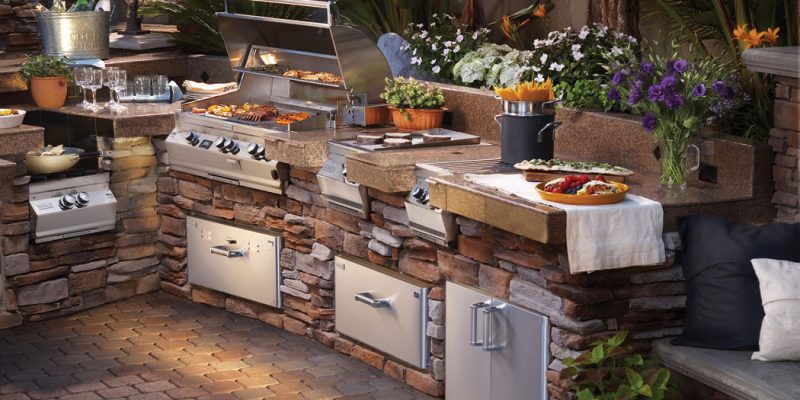
They haven’t quite hit the mainstream, but outdoor kitchens truly do offer something special to the entertaining homeowner. Even if you’re not hosting guests, there’s nothing like cooking breakfast outside during a beautiful morning or mixing drinks at your backyard bar on a warm summer night.
That said, your outdoor kitchen has the potential to be a real headache if improperly installed. All the standard electrical and plumbing issues of an indoor kitchen can be exasperated by your set up’s exposure to the elements, so you want to make sure you use the right equipment and materials from the get go instead of paying for expensive repairs and replacements down the line. Here’s a few helpful tips for getting started:
1. Start from the ground up.
Your space needs an established floor layout before you can move on to the finer details. This is the step that forces you to consider some of the most important factors when it comes to outdoor kitchen installation: budget, location, climate, expected users, and expected weight of appliances. Be sure to use a material that won’t become slippery when wet, and keep grills and stoves away from the windows of your house, where smoke might waft indoors. Proper flooring will not only ensure that you have a finished overall look to your outdoor kitchen area, but it will also ensure that your end product is durable and retains its overall value.
2. Determine the size and number of your appliances.
This step generally is simultaneous with step #1; a helpful floor plan stems from an understanding of what appliances are necessary, and what appliances are necessary can be determined by the limits of the potential floor plans. Either way you look at it, you’ll need to figure out exactly what kind of cooking needs you want to fill outdoors, and balance those preferences with the space and cost limitations that you face. If you have a grill, for example, you’re going to want to leave space on either side of the grill for platters and grilling tools. That means if there’s no other place to put your full-size fridge, you may want to consider picking one or the other.
3. Leave plenty of storage space.
Just like an indoor kitchen, comfortable outdoor kitchens have plenty of convenient nooks and crannies where kitchen items can be kept onhand and at the ready. Countertops and cabinets allow you the convenience of a spatially accommodating culinary work space, and they’ll be sorely missed if overlooked. When deciding how much storage your kitchen needs, you may want to consider whether you’ll be using it year round or seasonally and whether you plan on cooking for your immediate family or dozens of guests.
4. Pick the right appliances.
If you want a fun place to entertain instead of a constant headache, you’re going to want to spend the extra money on appliances that will function and retain their good looks for the long haul. Stainless steel and ceramic appliances are known for keeping up well in all sorts of weather, but you’re not going to want to opt into any cheapo IKEA appliances for a project like this. Also be sure to hire the services of a professional plumber and electrician that you trust to do a good job; you won’t want to pay for the same service again, la ter down the line.
5. Spend a little extra on ambiance.
After all, your outdoor kitchen is a luxury, not a utility. Money spent on tasteful specialty lighting, large dining and buffet tables, comfortable furniture, and classy bar utilities will be much appreciated by guests and home dwellers alike for years to come. Enjoy!